
JOURNAL
Notes on listening,
place, music, and practice.
From 6:35 PM to 8:30 PM. Responding to Reality.
Tonight reminded me what work truly means. At 6:35 PM, a guest asked us to turn the volume down. We could have simply turned the music down. Instead, we asked a different question. "What kind of music truly belongs to this moment?"
By 8:30 PM, Moon Stage had become something entirely different. Melissa let go of the Latin set she had planned. Not because it had failed. Not because it lacked energy. But because the evening itself was asking for another voice.
Don't Know Why.
Moon River.
Tinsagu nu Hana.
Sayonara COLOR.
Luna.
Fly Me to the Moon.
She wasn't simply performing songs. She was performing the time itself. After the show, a little child ran up to her. "Thank you for all the beautiful songs." Not, "You sing so well." But "Beautiful songs." That difference stayed with me. Anyone can make a playlist. Very few people can curate an experience while standing on stage, singing every note themselves. That is not merely performance. It is musical curation. Tonight also reminded me of something much larger. Work is not about defending our original plan. Work is about receiving reality, and creating a better experience in the next moment.
This is true in music.
It is true in design.
In education.
In hospitality.
In organizations.
The world does not change simply because people have beautiful ideals. It changes because someone quietly observes reality and edits it into something slightly more beautiful.
That is exactly what happened tonight. A request to lower the volume became a question. "What should Moon Stage become tonight?" The answer appeared as tears in someone's eyes. As a child's gratitude. As families walked away, saying,
"That was wonderful."
As spontaneous applause beneath the moon. Of course, there was chance. Every evening has its own mystery. But we were not waiting for magic.
We responded to reality.
And by responding, we created space where something unexpected could happen. For one evening, Melissa and I set aside our egos. We trusted our craft.
Our ears.
Our hearts.
Our bodies.
Together, we transformed what happened at 6:35 PM into something new by 8:30 PM. That was not improvisation. It was the result of years of observing, listening, reflecting, and learning. Tonight reminded me that this way of working can exist anywhere in the world. Not because it is perfect. But because it always begins with the same question.
"What does this moment truly need?"
I want to spend the rest of my life living inside that question.
18:35から20:30へ。仕事とは、現実に応答すること。
今日、ひとつの出来事があった。
18:35。
レストランの客席から、「音量を少し下げてほしい」
という声が届いた。その瞬間、私たちは考えた。
音量を下げることが答えなのだろうか。いや、違う。本当の問いは、「この時間に、本当にふさわしい音楽とは何だろう。」ということだった。
20:30。
Moon Stage。
Melissaはそれまで演奏していたラテンのセットをやめた。でも、それはエネルギーを失うことではなかった。むしろ、その夜の月明かりに寄り添うように、
* Don't Know Why
* Moon River
* てぃんさぐぬ花
* さよならCOLOR
* Luna
* Fly Me to the Moon
という流れを編み直した。それは、曲を並べたのではない。Moon Stageという時間、そのものを演奏していた。終演後、子どもが駆け寄ってきた。「お姉ちゃん、いい曲ばかりありがとう!」歌が上手だった、と言ったのではない。「いい曲ばかり。」その言葉が、とても印象に残った。選曲は誰にでもできる。けれど、自ら演奏し、歌い、その場の空気に合わせて時間そのものを編集することは、誰にでもできることではない。それは、音楽の演奏ではなく、音楽のキュレーションだった。
今日、私はもう一つ、大切なことを学んだ。仕事とは、目の前の現実を受け止め。次のステージでより良い体験をつくること。これは音楽だけの話ではない。デザインも。教育も。ホテルも。組織も。きっと同じだ。世界は、理想を語る人だけでは変わらない。
現実を観察し、そこから一歩だけ良い方向へ編集する人によって、少しずつ変わっていく。今日の演奏は、そのことを証明してくれた。「音量を下げてください。」という一つの出来事を、「Moon Stageとは、どんな時間なのだろう。」という問いへ変えた。
そして、その答えは、ある女性の涙になり、子どもの「ありがとう」になり、家族の「楽しかったね」になり、最後には、大きな手拍子となって返ってきた。
もちろん、そこには偶然もある。今日という日だけの巡り合わせもある。でも、私たちは偶然を待っていたのではない。現実に応答した。だからこそ、偶然が生まれる余地が生まれた。
Melissaと私は、自分たちのやり方やエゴをいったん脇に置いた。才能も。技術も。心も。身体も。そのすべてを使って、18:35に起きた出来事を、20:30には別の景色へと変えてみせた。
それは、一日で身についた技術ではない。何年も積み重ねてきた観察と対話、そして改善の積み重ねがあったからこそできた。私は、この仕事の姿勢を信じて生きていきたい。世界を変えるためではない。目の前の時間を、昨日より少しだけ美しくするために。
その積み重ねが、誰かの旅の記憶になり、いつか、世界を静かに変えていくと信じて。
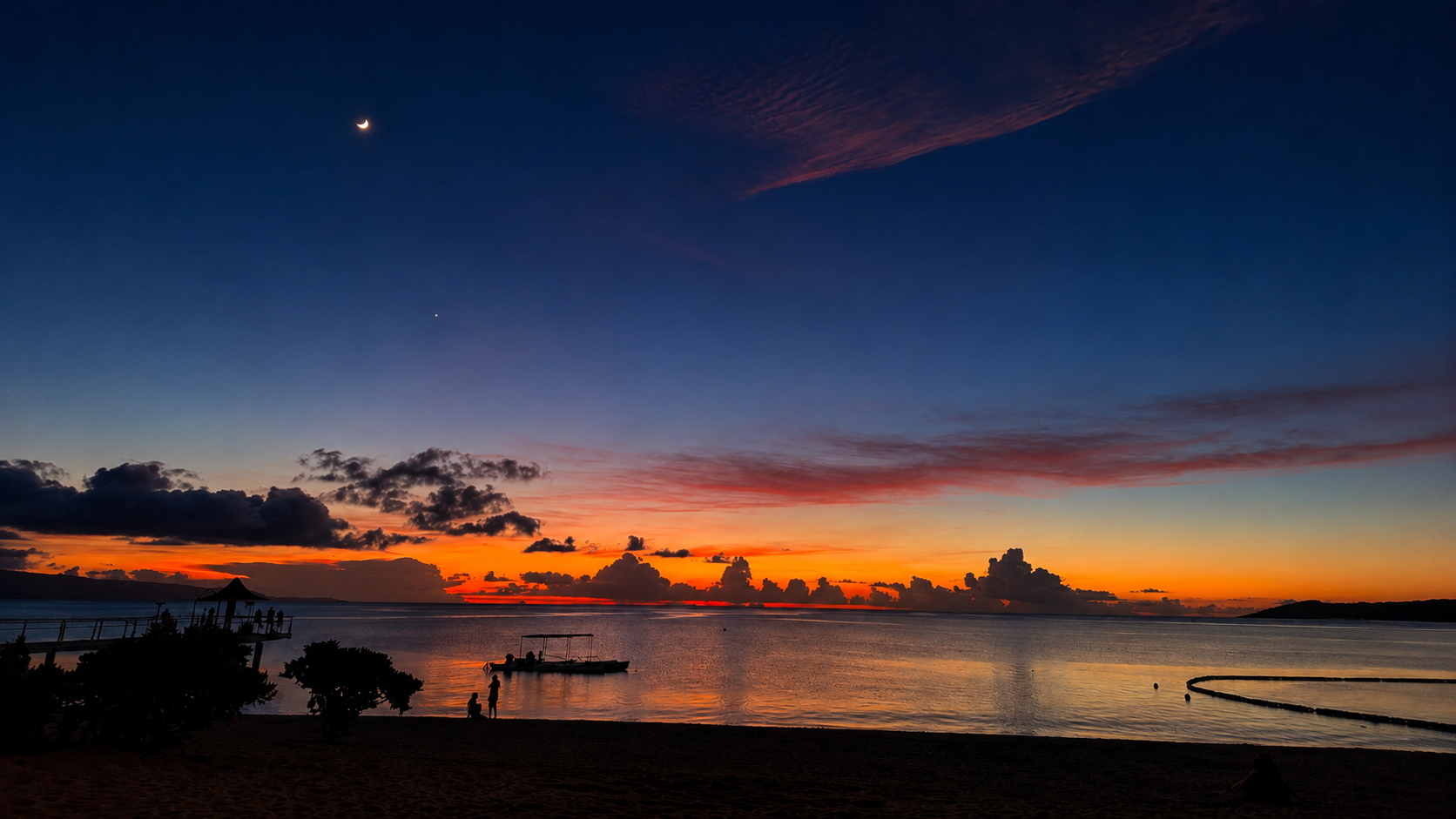
月がいつの間にか夜空に現れるように。
ルーミーの言葉として伝えられている一節がある。
‘As you start to walk on the way, the way appears.’
「歩き始めると、道は現れる。」
この言葉が、いま不思議なくらい、来る。
道を探すな。
歩きなさい。
道は歩いた先にあるのではなく、
歩くことそのものの中に現れる。
そう考えると、私が大切にしてきた「月を待つ時間」にも、どこか似ている。
月は無理に探しに行くものではない。
空を見上げながら、
風や波の音を聴き、
静かにその時を迎える。
そして気づくと、
月はそこにある。
未来も、きっと同じなのだと思う。
すべてが見えてから進むのではない。
確かな答えを手にしてから始めるのでもない。
今日できる一歩を歩く。
人に出会い、
音楽を聴き、
場所に耳を澄まし、
自分の心が動く方へ、もう一歩進む。
すると、
それまで何もなかったように見えた場所に、
少しずつ道が現れてくる。
道を見つけて、歩くのではない。
歩いているから、
道になっていく。
月がいつの間にか夜空に現れるように。
道もまた、
そんなふうに現れるのかもしれない。
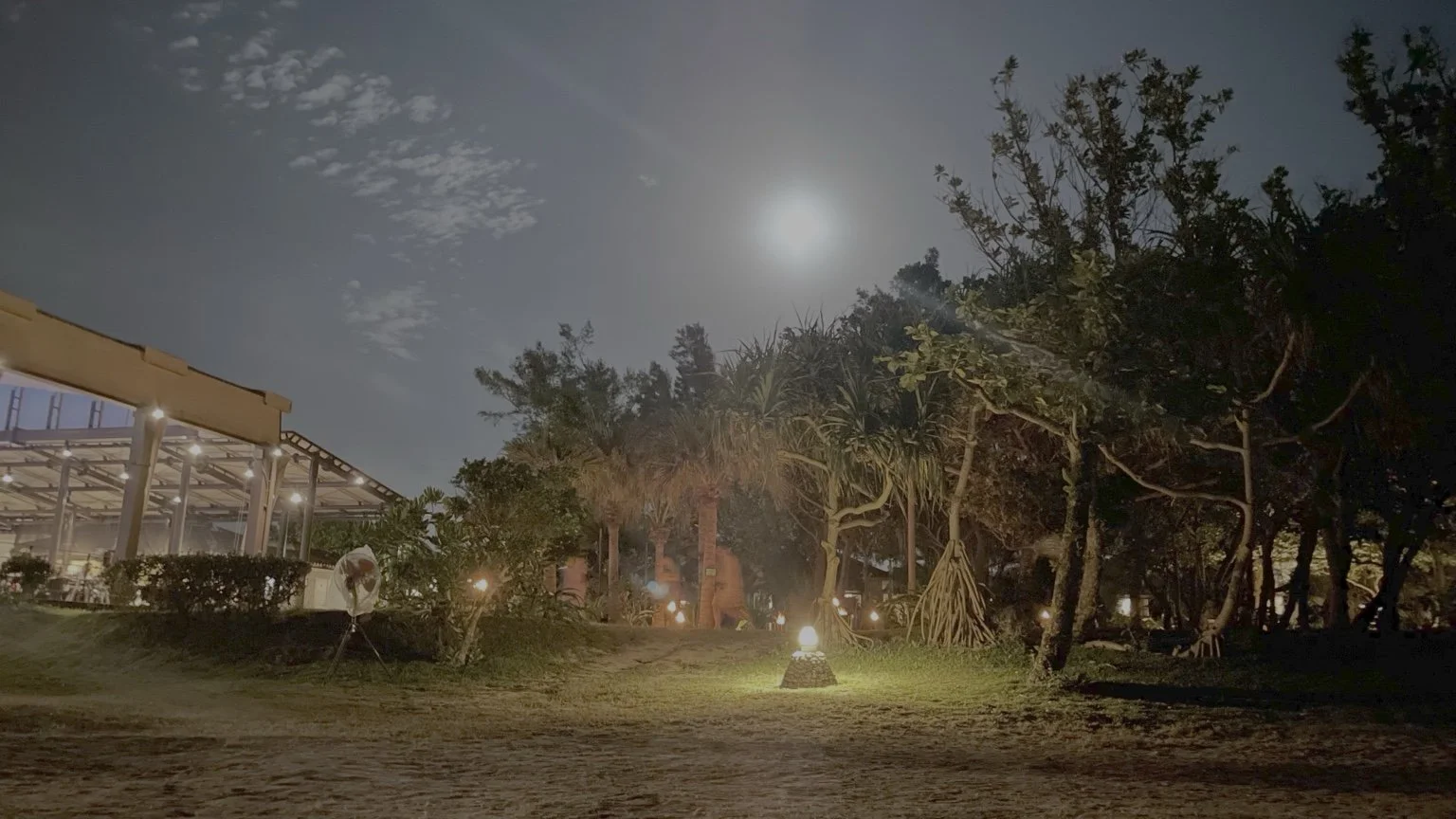
Like the moon appearing quietly in the night sky.
There is a line often attributed to Jalāl al-Dīn Muḥammad Rūmī:
‘As you start to walk on the way, the way appears.’
For some reason, these words are finding their way deeply into me now.
Don’t search for the path.
Walk.
The path is not something waiting at the end of the journey.
It appears in the act of walking itself. Perhaps this is not so different from something I have come to cherish: the time spent waiting for the moon.
We do not go looking for the moon.
We look up at the sky,
listen to the wind and the waves,
and quietly stay with time passing.
Then, almost without noticing,
the moon is there.
Perhaps the future is like that too.
We do not have to see everything before we move.
We do not need a certain answer before we begin.
We take the step that is possible today.
We meet someone.
We listen to music.
We listen to a place.
We take another step toward whatever quietly moves us.
And little by little, a way begins to appear where, only moments before, there seemed to be none.
We do not find the way and then walk it.
We walk,
and it becomes the way.
Like the moon appearing quietly in the night sky.
Perhaps the way, too, reveals itself like this.
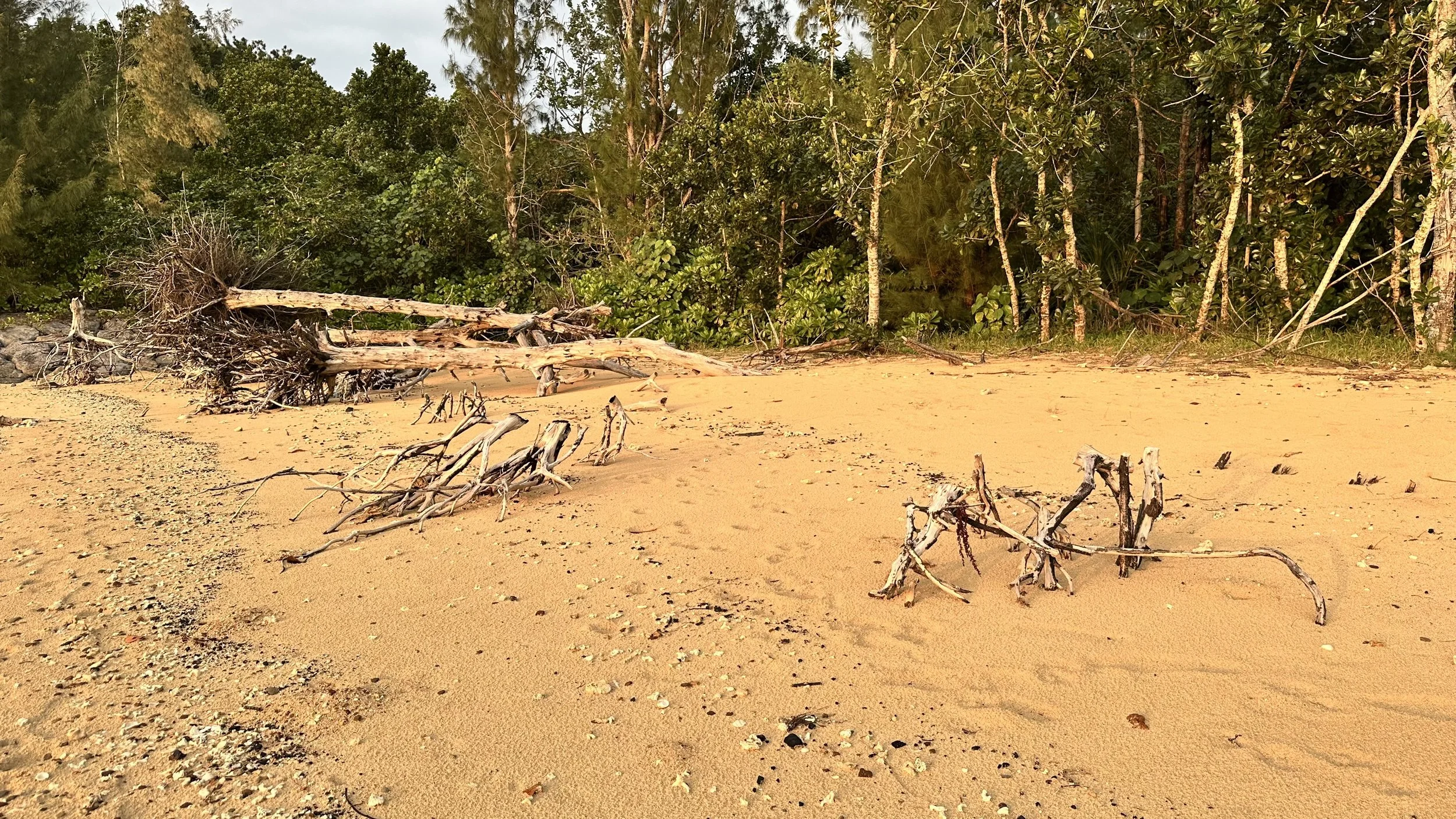
Where will I go, carrying all that I have cultivated?
Today marked a quiet turning point.
For a long time, I devoted my time, energy, and imagination to believing in someone else's potential. That was never a mistake. But one day, my body understood something before my mind could explain it.
The moment the music began.
The moment the voice entered the space.
The moment the room remained unchanged.
The moment the next door never opened.
In that silence, I realized something I could no longer ignore. The transformation that must arise from within another person can never be created from the outside. At the same time, another truth quietly emerged. The transformation I had been waiting for was, in fact, my own.
--- Looking back, I see a path defined by movement.
From Kyoto to Tokyo. From Tokyo to New York. Then London. I left the record industry, became an artist manager, worked in advertising under the name of “making things,” and moved into business management for a film director. And then—oh—Iriomote Island. And finally, Ishigaki Island.
At every turning point, one question carried me forward. Where will I go, carrying all that I have cultivated?
The ability to observe.
The discipline to edit.
The courage to make difficult decisions.
The willingness to move.
The responsibility of choosing words carefully. None of these appeared overnight. They were cultivated over decades.
Somewhere along the way, I began using those strengths primarily to sustain other people, other projects, and other possibilities. Today, I chose to bring them home.
--- From this day forward, I want to live by a different attitude.
Believe, but do not carry.
Guide, but do not replace.
Wait, but do not surrender your own time.
These words are not about creating distance. They are about respecting another artist's journey while remaining faithful to my own.
--- Something unexpected happened when I stopped trying to ignite every fire. The music became more natural. The space began to breathe. Synchronization returned—not because I pushed harder, but because I finally left room for another person to walk on their own. And in that same space, I found my own breath again.
--- I want to remember this day. Not as an ending. Not as a farewell. But as the day I stopped abandoning my own future. The day I began moving again—not because someone asked me to, not because someone needed me to, but because my own life was calling. So I return to the question that has quietly accompanied me through every chapter of my life.
Where will I go, carrying all that I have cultivated?
信念。
今日は、ひとつの転換点だった。
長いあいだ、私は「誰かの可能性」を信じることに、自分の時間や力を注いできた。それは間違いではなかった。けれど、ある瞬間、身体が先に知ってしまった。
音が鳴った瞬間。
声が出た瞬間。
空間が反応しなかった瞬間。
次の扉が開かなかった瞬間。
そのとき理解した。人の内側から起きるべき変化を、外側から起こすことはできない。
そして同時に、もうひとつのことにも気づいた。
本当に必要だったのは、私自身の内側から起きる変化だった。
--- 私は、自分の人生を振り返った。
京都から東京へ。東京からニューヨークへ。ロンドンへ。レコード会社を離れ、アーティストマネージャーとなり、ものづくりという名の広告をやり、映像ディレクターのビジネスマネージメントをして、おぉ、西表島へ、そして石垣島へ。
そのたびに、自分へ問い続けてきた。
私はこの力を持って、どこへ行くのか。
観察する力。
編集する力。
判断する力。
移動する力。
言葉にする力。
これらは、私が長い時間をかけて積み重ねてきたものだった。いつの間にか、その力を他者のために使いすぎていたのかもしれない。今日、その力を、自分自身の未来へ戻そうと決めた。
--- これからの私の態度は、とてもシンプルだ。
信じるけれど、背負わない。
導くけれど、代わらない。
待つけれど、自分の時間を差し出しすぎない。
これは誰かを見放すための言葉ではない。誰かを一人の表現者として尊重するための距離であり、同時に、自分自身の未来を見捨てないための約束でもある。
--- 不思議なことに、この距離を受け入れてから、音楽は以前より自然になった。
無理に火をつけようとしなくても、
無理に意味を与えようとしなくても、
音楽は、自分自身の呼吸を取り戻し始めた。
私もまた、自分自身の呼吸を取り戻し始めている。
--- 今日という日を忘れない。
これは終わりではない。
自分の意志で、自分を動かし始めた日。
そして、もう一度、自分に問い続ける。
私はこの力を持って、どこへ行くのか。
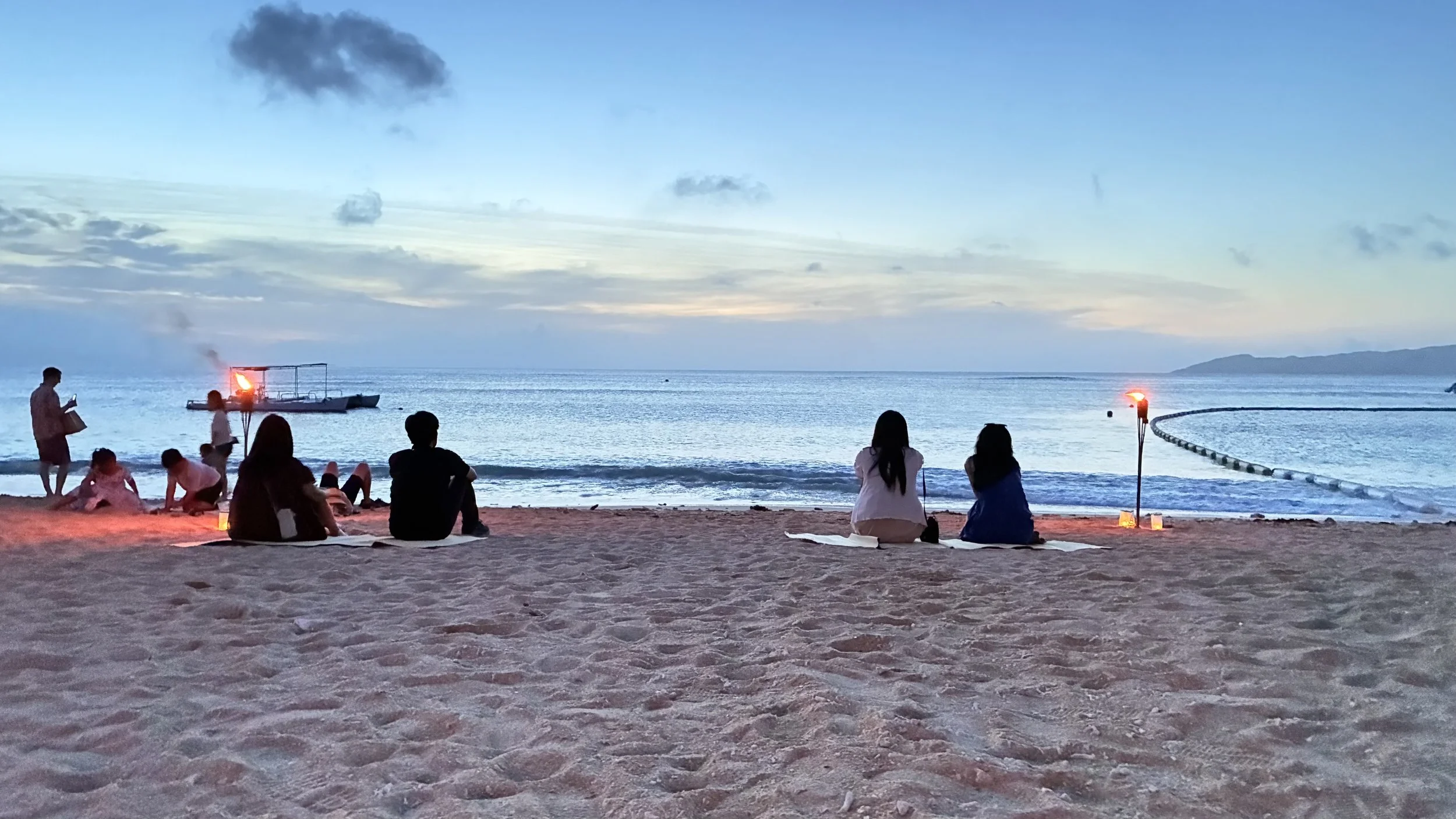
‘それ自体に価値があること’
このテーマについて、本格的に書かなければならない。問題は本質的にはこういうことだ。

もし私が、「あのトルコ絨毯の価値とは、それ自体にあるのではなく、私たちの中に『価値』という感覚を呼び起こす能力の結果なのだ」と言うなら、

それは、「その絨毯には内在的価値(intrinsic value)がある」と言うことと、本当に違うのだろうか。
- Brian Eno, “A Year Swollen Appendices: Brian Eno’s Diary”
ブライアン・イーノの日記を読んでいて、ある問いに立ち止まった。
あるものの価値が、私たちの中に「価値」を呼び起こす力によって生まれるのだとしたら、それは、そのもの自体に intrinsic value──それ自体に価値があること──内在的な価値──があると言うことと、本当に違うのだろうか。
この問いを読みながら、島で過ごしてきた時間のことを考えた。
夕暮れ。
波の音。
月明かり。
風。
人がうたうこと。
私たちは、こうしたものに価値を「加える」ことができるのだろうか。
むしろ、もともとそこにあるものと出会うことで、私たちの内側に何かが起こるのではないか。
音楽についても同じかもしれない。
音楽が自然を美しくするのではない。
音楽によって、そこにあった風や波や光を、もう一度聴き、見ることがある。
そう考えると、私がこの島でしてきたことは、価値をつくることではなく、価値に気づくための関係を整えることだったのかもしれない。
価値は、自然の中にあるのか。
私たちの中にあるのか。
まだ、よくわからない。
けれど、そのどちらかではなく、世界と私たちが出会うところに、価値は立ち上がるのかもしれない。
今日、intrinsic value という言葉から、そのことを考えた。
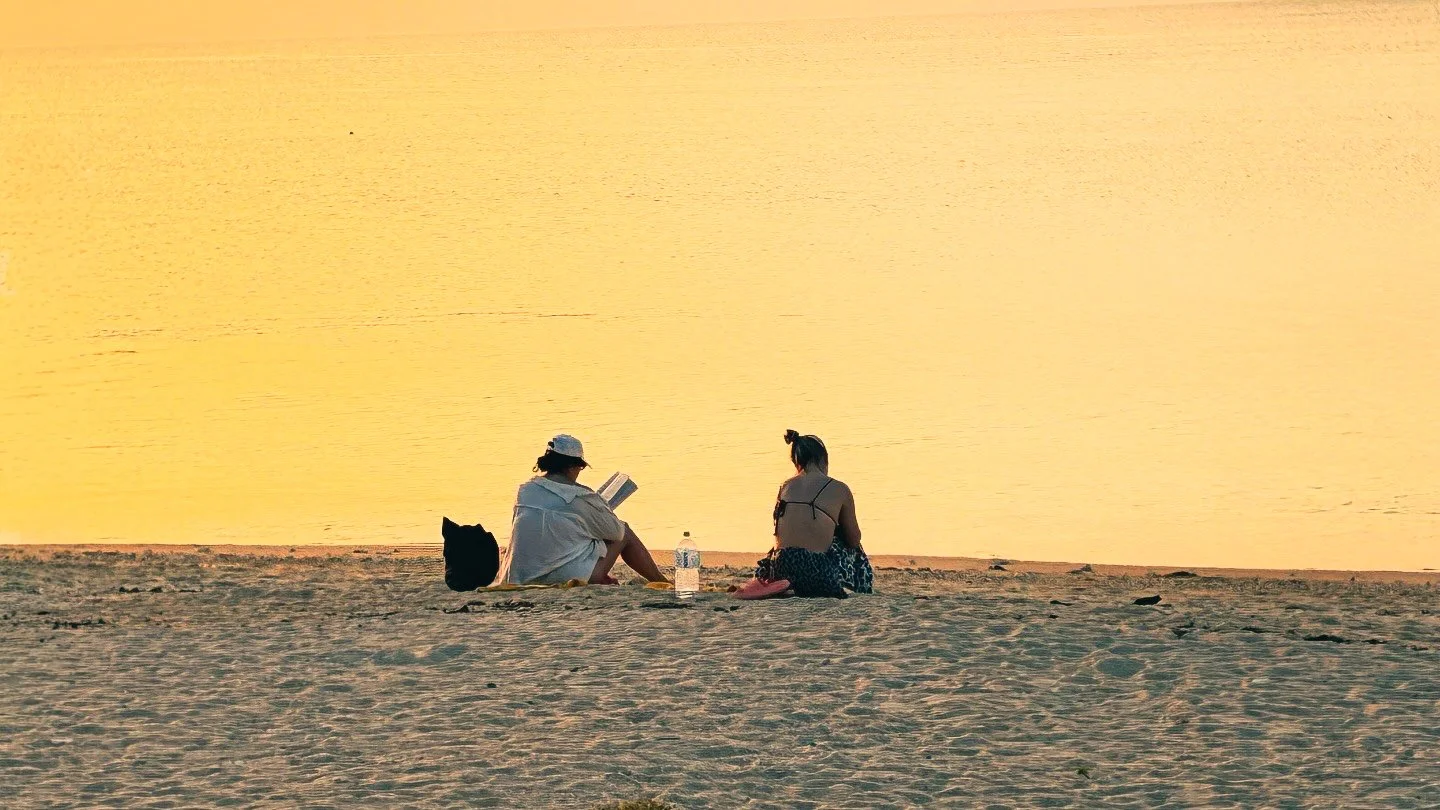
‘Intrinsic Value’
I have to do some serious writing about this theme. Essentially the problem is this: if I am saying that the ‘value’ of those Turkish carpets is a function of their ability to trigger ‘value’ in us, is that different from saying that they have intrinsic value?
Brian Eno, “A Year Swollen Appendices: Brian Eno’s Diary”
While reading Brian Eno’s diary, I stopped at a question.
If the value of something lies in its ability to trigger a sense of value in us, is that really different from saying that the thing itself has intrinsic value?
Reading this, I began thinking about the years I have spent on these islands.
Dusk.
The sound of waves.
Moonlight.
Wind.
A person singing.
Can we really add value to any of these things?
Perhaps something else happens: we encounter what is already there, and something is awakened in us.
Maybe music works in the same way.
Music does not make nature beautiful.
Sometimes music simply makes us hear the wind and waves again, or notice the light that was already there.
Seen this way, perhaps what I have been doing on these islands was never about creating value, but about creating the conditions in which value can be noticed.
Does value reside in nature?
Or does it arise within us?
I don’t know yet.
Perhaps it belongs entirely to neither. Perhaps value comes into being somewhere in the encounter between the world and ourselves.
Today, the words intrinsic value gave me another way to think about this.
An ordinary miracle | A Note from Tonight
“Travel breaks the illusion that your current life is the only one possible.”
演奏する前に、聴くこと
場所の気候、海、時間、そして文化的な境界に、注意深く耳を澄ませる実践。
八重山で暮らし、音楽に関わるなかで、私たちは「聴く」という行為を少しずつ学び直してきました。聴くことは、音だけに集中することではありません。
風向きや湿度、潮の満ち引き、日が沈む速さ、月が現れるまでの時間に、身体をひらくこと。海が静かな日と荒れる日では、同じ音楽でも、その居場所は変わります。ここでは、自然は音楽の背景ではありません。私たちが演奏を始める前から、海も、風も、鳥も、暮らしの音も、すでに鳴っています。音楽は、その場所に新しい音を置くことではなく、すでにそこにある響きに加わり、応答することなのかもしれません。
場所を聴くことは、その土地の歴史や記憶、そして文化的な境界に耳を澄ませることでもあります。八重山には、祈りや共同体の記憶と深く結びついた唄や場所、物語があります。出会ったものすべてが、記録し、説明し、編曲し、外へ運んでよいものとは限りません。
聴くことは、踏み込む許可を得ることではありません。
ときには、待つこと。尋ねること。触れずに残すこと。そして、沈黙することも、聴くという実践の一部です。私たちは、八重山を代表したり、八重山そのものを表現したりできるとは考えていません。むしろ、この場所とどのような関係を結ぶことができるのかを、
今も学び続けています。
何を受け取ることができるのか。
何を、その場所に残すべきなのか。
何を、外へ運ばないのか。
Just You & The Moonにとって、
ライブは、その関係が音として現れる場所です。
声、楽器、電子音、環境音が風景の上に置かれるのではなく、ある日の海、風、光、そして夕暮れの時間と出会う。そのため、同じ曲を演奏しても、まったく同じ時間は二度と生まれません。
映像は、その時間の一部を残すことができます。
けれども、気温や風の強さ、海までの距離、日が沈んだあとの暗さまで、すべてを記録することはできません。だからこそ、私たちは映像を、その場の体験に代わるものではなく、もう一度耳をひらくための入口として残したいと考えています。
演奏する前に、
聴くこと。
音を外へ運ぶ前に、
それが何に属しているのかを問い直すこと。
聴くことは、作品をつくる前の準備ではありません。
聴くことそのものが、私たちの実践です。
Listening Before We Play
A practice of listening closely to the climate, sea, time, and cultural boundaries of a place.
Living and making music in Yaeyama has gradually taught us to reconsider what it means to listen.
Listening is not simply a matter of concentrating on sound.
It means opening the body to the direction of the wind, the humidity, the movement of the tides, the pace of sunset, and the time before the moon appears. The same music finds a different place when the sea is calm and when it is restless.
Here, nature is not a music background.
Before we begin to play, the sea, wind, birds, and sounds of everyday life are already present. Perhaps music is not about placing another sound upon a landscape, but about entering what is already sounding there and learning how to respond.
Listening to a place also means attending to its histories, memories, and cultural boundaries.
In Yaeyama, certain songs, places, and stories are deeply connected to prayer and communal memory. Not everything we encounter is ours to record, explain, rearrange, or carry elsewhere.
Listening does not permit us to enter.
Sometimes listening means waiting and asking and leaving something untouched. It can also mean choosing silence.
We do not claim to represent Yaeyama or to express the islands as a whole. We are still learning how to be in relation to this place.
What may be received?
What should remain where it belongs?
What should not be carried outward?
For Just You & The Moon, live performance is where this relationship becomes audible.
Voice, instruments, electronic textures, and environmental sounds are not placed on top of the landscape. They meet a particular sea, wind, light, and hour of dusk. This is why the same song can never create the same moment twice.
A film can preserve something of that encounter.
But it cannot fully hold the temperature, the force of the wind, the distance from the sea, or the darkness that follows sunset. We therefore want these films to exist not as substitutes for being there, but as invitations to open our ears once again.
Before we play,
we listen.
Before carrying a sound elsewhere,
we ask what it belongs to.
Listening is not preparation for the work.
Listening is the work.
Music Lovers in Hong Kong
Sometimes,
a journey begins long before a ticket is booked.
Last night,
after my DJ set on the beach,
a man from Hong Kong came over to say hello.
“Your music was wonderful.
Who was that song by?”
We talked for a while,
sharing the names of artists we both loved.
Then he asked,
“Do you have Instagram?”
I hesitated.
The truth is, I have never thought of myself as a DJ.
I’m simply a music lover.
I collect sounds,
memories,
and moments.
I play music because I love it,
not because I belong to a particular scene.
He smiled.
“Then let’s be friends—
as fellow music lovers.”
It was such a simple thing to say,
yet it stayed with me.
Later that night,
I remembered one particular moment.
I had played the final encore from Jack Johnson’s live performance in Paris—from Angel into Better Together.
From the booth,
I noticed him beginning to dance.
Nothing dramatic.
Just a natural response
to a song he already carried within himself.
At that moment,
I felt something familiar.
Music has always been like this.
It quietly dissolves
the things that usually separate us—
countries,
professions,
generations,
titles.
For a brief moment,
all that remains is:
“I know this song. I love this feeling, too.”
And perhaps, that is enough.
That is why I decided to travel to Hong Kong.
Not because it was convenient.
Not because it was on a list of places to visit.
But because somewhere in that city,
there are people who listen carefully.
People who carry music with them,
the same way I do.
Maybe we will meet again.
Maybe we won’t.
Either way,
the city already feels a little closer.
Music is a strange and beautiful thing.
It allows us to recognize one another,
even before we know each other’s names.
And perhaps,
the world is held together by countless music lovers,
quietly listening, in different corners of the earth.
Tsuki to Nami no Koto.
A journey to recover our natural rhythm.
Music Lovers in Hong Kong
香港へ行くことにした。
理由は、とてもシンプルだった。
昨日の夜、Island EchoのDJブースに声をかけてくれた人がいた。
「ねぇ、音楽、最高だった。あの曲、誰の曲?」
そんな会話から始まった。
「あなたのInstagramは?」と聞かれた。
少し困ってしまった。私はDJというより、ひとりのMusic Loverだから。
誰かに見てもらうためのアカウントも、特別な肩書きも、持っていない。
そう応えると、彼は笑いながら言った。
「じゃあ、友だちになろう。同じMusic Loverとして。」
その言葉が、とても嬉しかった。
その夜、私がかけていたのは、
Jack Johnsonのパリ公演のライブ音源だった。
最後のアンコール、“Angel”から、“Better Together”へ。
ブースの向こう側、
波際で彼が自然に踊り始めていたのをわたしは見ていた。
ああ、
この人も、
同じ音楽を聴いて生きてきたんだ。
そう思った。
音楽には、
不思議な力がある。
国籍も、
職業も、
肩書きも、
年齢も、
どうでもよくしてしまう。
ただ、「この曲が好きなんだ。」
そのことだけで、
人と人が繋がる瞬間がある。
だから、今回の旅は香港になった。
観光のためでもなく、
効率のためでもなく、
音楽を愛する人たちが暮らす街を、
少し歩いてみたくなったのだ。
もしかしたら、
彼のようなMusic Loverに会えるかもしれないし、
会えないかもしれない。
それでも、
香港には、同じように音楽を愛し、
日々の暮らしの中で、静かにレコードを聴いている人たちがいる。
そう思うだけで、旅へ向かう理由としては、
十分な気がしている。
音楽って、本当にいい。
世界中のMusic Loversが、
こうして、
どこかで繋がっているのだから。
月と波のこと。
人はただただ自然を求めているのではないのかもしれない。
石垣島のビーチに立っていると、
不思議なことが起きる。
人の感受性が、少しずつ戻ってくる。
それは、何か特別な演出によって起きるものではない。
大きな音楽や派手な光や過剰なサービスによって起きるものでもない。
月があり、波があり、風があり、暗さがある。
夕暮れから夜へと変わっていく空があり、急がなくてよい時間がある。
その中に数日だけ身を置くことで、
人は少しずつ、自分の中にあったリズムを思い出していく。
人は自然を求めているのではないのかもしれない。
自然の中で思い出す、自分自身を求めているのかもしれない。
月も、
波も、
風も、
音楽も、
何かを与えてくれるのではないか。
もともと自分の中にあったものを、
静かに思い出させてくれる、
何かを。
We remember the rhythm that was already inside us.
石垣島のビーチで起きているマジックは、
月や波そのものではなく、
人が本来のリズムを思い出していく過程にある。
だから「月と波のこと。」は、
自然を紹介するためのプロジェクトではない。
人が自分の感受性を取り戻すための
記録であり、
場づくりであり、
人が本来のリズムを思い出していく、
その実践であり、
祈りである。
We Remember the Rhythm That Was Already Inside Us
Standing on the beach in Ishigaki, something quiet begins to happen.
A person’s sensitivity slowly returns.
It is not created by a special performance.
It does not come from loud music, bright lights, or excessive service.
There is the moon.
There are the waves.
There is the wind, the darkness,
and the sky slowly changing from dusk into night.
There is time that does not ask us to hurry.
By placing ourselves, even for just a few days, inside this natural system, we begin to remember a rhythm that was always within us.
Perhaps people are not truly seeking nature itself.
Perhaps they are seeking the self that is remembered in nature.
The moon, the waves, the wind, and music do not give us something new.
They quietly remind us of something that was already there.
The magic that happens on the beach in Ishigaki is not simply the moon or the waves themselves. It is the process of a person remembering their own original rhythm.
This is why Of Moon and Waves is not a project created to introduce nature. It is a record, a practice of creating places, and a prayer for people to recover their own sensitivity.
グリーンフラッシュの気配
先日のIsland Echoに、写真家の北島清隆さんが来てくれた。
いつものように撮影をしながら、
少し立ち話をした。
話題はなぜか腰痛だった。
今年のゴールデンウィーク前、
東京での個展を控えたある日、
(サーファーでもある北島さんは)
大好きな海でくしゃみをした瞬間にぎっくり腰になり、
そのままヘルニアになってしまったという。
神経ブロックを打ちながら個展へ向かったこと。
歩けなくなることへの恐怖。
そして、60歳という年齢で身体と向き合うこと。
どれも深刻な話のはずなのに、
北島さんはいつもの穏やかな笑顔で話してくれた。
痛みが消えたわけではない。
発症から50日ほど経った今も、
歩くとまだ痛むという。
それでも海へ行く。
それでも写真を撮る。
それでも夕暮れを見に来る。
その姿に、不思議な強さを感じた。
そう、北島さんはサーファーでもある。
長い時間を海と共に過ごしてきた人だ。
その日も、ふと空を見ながら言った。
「今日は少しグリーンフラッシュの気配があったからね。」
グリーンフラッシュ。
日没の最後の一瞬、
太陽の上端が緑色に光る自然現象。
しかし北島さんが語ったのは、
現象そのものではなかった。
まず空気が澄んでいること。
太陽の力が強いこと。
今日のように、
夜7時を過ぎても肌が焼けるほどの陽射しが残っていること。
そして水平線の先に雲がないこと。
ただ最後は、結局、すべて運なのだ、という。
どれだけ条件が揃っても、
遠くの雲ひとつも見えなくなる。
だから待つしかない。
自然は約束してくれない。
それでも人は空を見る。
もしかしたら見えるかもしれないから。
私はその話を聞きながら、
Island Echoも少し似ていると思った。
何かを作ろうとしているようでいて、
実際には条件を整えているだけなのかもしれない。
月が昇ること。
風が吹くこと。
波が寄せること。
人がそこに座ること。
その先に何が起きるかは、
結局のところ、
自然の領域にある。
グリーンフラッシュも同じだ。
見ようとして見られるものではない。
ただ、
その気配を感じられる人はいる。
北島さんは撮影の合間に、
また海の方へ歩いていった。
私は自然治癒力の話をして、
愛用している漢方の松寿仙と紫華栄のことを伝えた。
「どこで買えるの?」
「はと薬局です。」
「ああ、(はと薬局は) 仲良しだから行ってみます。」
そう言って笑いながら、
またカメラを持って浜辺へ戻っていった。
痛みを抱えながらも海へ向かう人の背中は、
どこか静かだった。
グリーンフラッシュは見えなかったかもしれない。
けれどその日、
私は確かにその気配のようなものを見た気がした。
The Feeling of a Green Flash
Photographer Kiyotaka Kitajima joined us at Island Echo the other evening.
As always, he arrived quietly, camera in hand, carrying stories that seemed to belong to the landscape itself.
This time, the conversation began with an unexpected subject: a herniated disc.
Just before an exhibition in Tokyo earlier this MAY, he (who is also a surfer) sneezed while standing by the ocean and suddenly threw his back out. What began as a severe strain developed into a herniated disc, leaving him in constant pain. He spoke about nerve block injections, the fear of losing mobility, and the reality of facing physical limitations at sixty.
Yet there was no bitterness in his voice.
Only calm.
The kind of calm that seems to come from spending a lifetime listening to waves.
More than fifty days have passed since the injury. Walking is still painful. But he continues to go to the ocean.
He continues to photograph.
He continues to show up for sunsets.
There was something quietly powerful in that.
At one point, he looked toward the horizon and said:
“I felt there might be a chance of a green flash tonight.”
Not that he expected to see one.
Not that he knew one would appear.
Only that he could sense the possibility.
A green flash is a rare optical phenomenon that sometimes appears for a brief moment as the sun disappears below the horizon.
According to Kitajima, there are signs.
The air must be clear.
The sun must remain strong until the very end of the day.
The atmosphere must be sufficiently transparent.
And even then, a single cloud on the horizon can change everything.
The final outcome belongs to chance.
Or perhaps to nature itself.
Listening to him, I realized that Island Echo may work in much the same way. We often imagine that meaningful experiences are something we create. But perhaps all we can really do is prepare the conditions.
The moon rises.
The tide changes.
The wind arrives.
People gather.
What happens after that is beyond our control.
We wait.
We listen.
And sometimes, something appears.
Not because we made it happen.
But because we were present when it arrived.
Maybe that is why people seek places like this.
Not because they are searching for nature.
But because they are searching for themselves.
Or more precisely, they are searching for the part of themselves that can only be remembered in the presence of nature. The version of themselves that existed before schedules, notifications, expectations, and noise. Nature does not give us anything new. It simply reminds us of what was already there.
As the conversation ended, Kitajima smiled, adjusted his camera, and walked back toward the beach.
The green flash never appeared that evening.
At least, not on the horizon.
But I felt its presence nonetheless.
Not as a flash of light.
As a quiet reminder that even in pain, even in uncertainty, there is still beauty worth walking toward.
On Writing Honestly
Lately, I have been thinking about what it means to write honestly.
Not emotionally.
Not dramatically.
Honestly.
There is a difference.
For more than five years, I have shared a small musical journey with Yaeyama musicians here on Ishigaki Island. We do not talk very much about what we are doing.
We simply gather.
The waves arrive.
The wind changes.
The moon appears—or sometimes it doesn’t.
And then the music begins.
Last night was a New Moon.
The sky was covered with clouds,
and yet one of the musicians quietly said:
“Even a cloudy New Moon has its own beauty.”
Another spoke about the sound of the waves and how rare it is to sing in a place where nature feels so present. Listening to them, I realized once again that music is not an explanation.
It is a form of experience.
For an event’s official channels (as the organizer),
I often write simple phrases:
The sound of waves and music.
Waiting for the moon.
An evening on Ishigaki Island.
These words are true.
But they are not the whole truth.
The deeper truth is harder to write about.
Because sometimes a song reaches a place inside a person that words never can.
I know this because it happened to me once. There have been moments in my life when hearing a song changed something permanently.
Not dramatically.
Not all at once.
But enough that I could never return to who I was before.
Yesterday reminded me of a quote by the Japanese writer Masaoka Shiki:
“I once thought enlightenment meant being able to die peacefully under any circumstance. I was mistaken. Enlightenment is being able to live peacefully under any circumstance.”
Perhaps that is what music sometimes offers us.
Not escape.
No answers.
But a way to remain present with life exactly as it is.
The sadness.
The memories.
The beauty.
The uncertainty.
All of it.
When the voices, the waves, the darkness, and the New Moon gathered together last night, I felt something I still cannot fully describe.
And perhaps that is the point.
The most important things are often the hardest to explain.
Music does not explain.
It simply opens a door.
And for a brief moment,
we remember the rhythm that was already inside us.
赤裸々に描くこと
赤裸々に描く。
もし赤裸々に描けたとして、
その絵が本当に赤裸々なのかどうか。
大切なのは、きっとそこなのだと思う。
Island Echoで起きていることを、
いつか赤裸々に書きたいと思っている。
たとえば、さださんが言う。
「曇天の日の新月もいい」。
そして、
「此処の波音はいい。此処で唄うことは、なかなか体験できないことだ」
そんなふうに言う。
そして、
さださんの妹御であり、
うたの返し手であるえりなさんが、
ライブの冒頭でこう言い切った。
「新月とは、浄化の日」。
その言葉に、心がふるえた。
私たちは、
現場で多くの言葉をわたしたちが交わすわけではない。
けれど、石垣島のこの場所で、
あの時間に、
空気を震わせるように
私たちは場を作りはじめて、
もう五年を超えた。
言葉では伝えられないことを、
音楽は伝えてくれる。
私たちは、それを説明しているのではない。
自分たちの身体で、そのままやっている。
私は企画書に平坦な言葉を書く。
波音と音楽。
石垣島で過ごす夜。
月を待つ時間。
それは嘘ではない。
むしろ、真実でしかない。
けれど、その真実の奥には、
まだ書けないことがある。
うたは、生で体験しなければわからない。
そして、ときに、そのうたを聴いたことで、人生が変わってしまうことがある。
私はそれを知っている。
けれど、言葉では書ききれない。
では、なぜ今日、こんなことを書いているのか。
私は、今朝、
正岡子規の言葉を思い出したからだった。
「悟りという事は如何なる場合にも平気で死ぬる事かと思っていたのは間違いで、悟りという事は如何なる場合にも平気で生きて居る事であった。」
新月の夜。
曇天の空。
波音。
大浜村のうた。
独唱と返しの声。
八重山のゆんた。
これらのすべてが
重なったとき、
私は、
音楽が何かを説明するものではないことを、
また思い出した。
音楽は説明しない。
ただ、その場にいる人の中で、
何かをほどいていく。
浄化とは、
美しい言葉を並べることではない。
悲しみも、
記憶も、
疲れも、
祈りも、
そのまま抱えたまま、
平気で生きていること。
たぶん、此処 Island Echoで起きていることは、
そのようなことなのだと思う。
月と波のあいだで、
人は少しだけ、
自分の本当の呼吸に戻る。
その瞬間を、私はまだうまく書けない。
けれど、書けないということの中にこそ、
この場所の真実がある。
Something beautiful happened tonight.
After the performance, Meli told me that she noticed someone in the audience was crying while she was singing. I was at the back of the venue, focused on the live mix, and I never saw them.
The song was Fine On The Outside.
Since then,
I have found myself wondering what might have been happening in that person’s heart.
Perhaps
they were remembering someone they loved.
Perhaps
they were thinking of home.
Perhaps
they were meeting a forgotten part of themselves.
Or perhaps
the night air,
the sound of the waves,
and the music simply touched something words could not reach.
I will never know.
And maybe that is exactly as it should be.
Music does not explain.
It opens doors.
Lately,
I have spent a great deal of time thinking about sound.
The balance between voice and instrument.
The depth of reverb.
The way music blends with the wind, the sea, and the darkness.
Tiny adjustments that can transform sound into a landscape.
Tonight reminded me that we are not creating events. We are creating moments where music can reach a human heart. There is something deeply moving about seeing someone touched by beauty. When another person feels healed, a part of us is healed as well.
Music is extraordinary.
Human beings are extraordinary.
Tonight, I was reminded of both.
Notes from the mixing desk.
Listening between moonlight and tides.